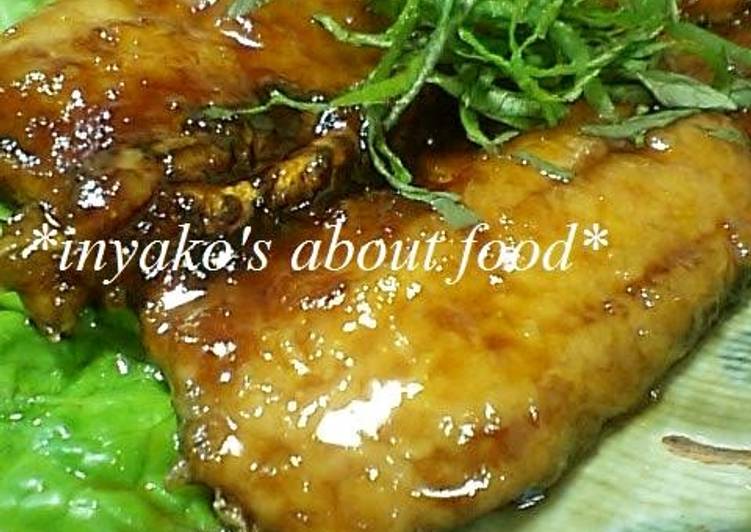
Hello everybody, hope you’re having an amazing day today. Today, I will show you a way to prepare a distinctive dish, sardine kabayaki. One of my favorites food recipes. For mine, I’m gonna make it a bit tasty. This is gonna smell and look delicious.
Japanese Home Recipes is a website for people who want to cook Japanese home cooking outside of Japan or who cook for their non-Japanese families. Sardine kabayaki is one of the most popular Japanese mom's cook. Kabayaki is a kind of teriyaki, often refers to grilled eel with sweet soy sauce.
Sardine Kabayaki is one of the most popular of current trending meals in the world. It’s easy, it’s fast, it tastes yummy. It is enjoyed by millions every day. They are nice and they look wonderful. Sardine Kabayaki is something that I have loved my whole life.
To get started with this recipe, we have to first prepare a few ingredients. You can have sardine kabayaki using 9 ingredients and 13 steps. Here is how you cook that.
The ingredients needed to make Sardine Kabayaki:
- Get 4 fillets Sardines
- Make ready 1 Katakuriko
- Get Kabayaki sauce
- Get 3 tbsp Soy sauce
- Prepare 3 tbsp or 1-2 tablespoons if you prefer your sauce to be less sweet Sugar
- Get 3 tbsp Sake
- Prepare 1 tbsp Mirin
- Prepare 3 tbsp Water
- Take 1 shiso leaves, daikon radish sprouts, or julienned cucumber Toppings
Continua la ricerca nella raccolta di iStock di immagini stock royalty-free con foto di Composizione verticale pronte per essere scaricate in modo. Gf Recipes Fish Recipes Sardine Recipes World Radio Boho Kitchen Japanese Food Japanese Recipes Nhk Slow Food. Kabayaki (蒲焼) is a preparation of fish, especially unagi eel, where the fish is split down the back (or belly), gutted and boned, butterflied, cut into square fillets, skewered, and dipped in a sweet soy sauce-based sauce before being cooked on a grill or griddle. Kabayaki is a popular Japanese cooking technique most often applied to eel (unagi).
Instructions to make Sardine Kabayaki:
- These are the sardines.
- Cut the head off.
- I believe that "kabayaki" means that fish should be butterflied from the back of it, so I cut the back open (I used my fingers to open it). You can off course open from the bottom.
- Take the guts and spine out, rinse well, and pat dry with paper towels.
- Coat the fish with katakuriko.
- Add oil to a skillet and pan-fry both sides of the fish. Cook the "meat" side first.
- Once it is done cooking, take it out from the skillet.
- Combine the ingredients for the kabayaki sauce.
- Add the sauce mixture from Step 8 in a skillet and bring it to a boil.
- Add the sardine from Step 7 in the skillet, and take care to dip only the flesh of the fish into the sauce. Then you're done.
- This amount of the sauce should be enough for 4 sardine fillets.
- The sauce maybe too concentrated for small children. Adjust the taste by not letting it simmer too much at Step 10 or adding more water to the sauce.
- Large-sized sardines have big bones, so you should remove those. You can also ask the grocer to fillet the fish for you.
Make social videos in an instant: use custom templates to tell the right story for your business. Post jobs, find pros, and collaborate commission-free in our professional marketplace. It is basted with a mixture of soy sauce,sugar, and sake. Suchen Sie nach Japanisches Essen Grillsardinfisch oder Iwashi kabayaki-Stockbildern in HD und Millionen weiteren lizenzfreien Stockfotos, Illustrationen und Vektorgrafiken in der. Kabayaki sauce is a sweet soy sauce-based glaze, used to coat fish before the fillets are grilled or broiled resulting in a flavorful crispy exterior.
So that’s going to wrap it up with this exceptional food sardine kabayaki recipe. Thank you very much for your time. I’m confident you will make this at home. There is gonna be interesting food in home recipes coming up. Remember to bookmark this page in your browser, and share it to your family, friends and colleague. Thanks again for reading. Go on get cooking!